A smooth audit starts well before the fieldwork begins. Use this checklist to get your books, records, and team ready, and to avoid last-minute scrambles.


A smooth audit starts well before the fieldwork begins. Use this checklist to get your books, records, and team ready, and to avoid last-minute scrambles.

If audit season makes you groan, you’re not alone. The word “audit” carries a lot of baggage, but a well-planned audit can be one of the most useful things that happens to your organization all year. Here is a practical guide to preparing, drawn from a GGFOA presentation on getting audit-ready.

Most growing businesses reach a point where the books can no longer be a side task. You’re up late reconciling accounts, a part-time bookkeeper is stretched thin, and nobody is sure whether the numbers are right until tax season. Client Accounting Services (CAS) exists for this moment.

Lease and subscription arrangements can be easy to overlook—but keeping an accurate, up-to-date listing of lease and subscription liabilities is an important part of maintaining reliable financial records.
Our firm offers a nonattest service designed to help governmental clients stay organized and keep pace with the requirements of GASB 87, Leases, and GASB 96, Subscription-Based Information Technology Arrangements (SBITAs).

Securing in-kind donations is vital for any non-profit or charitable organization, but just as important is accounting for them properly. In June 2020, the Financial Accounting Standards Board introduced changes to the General Accepted Accounting Principles (GAAP) for documenting and presenting the value of in-kind donations in financial statements. This article provides an overview of the changes and what you need to know.

As the 2026 calendar closes in on the October 15th deadline, many plan administrators are unsure if their employee benefit plan requires an audit. Our team can help you determine if your plan requires an audit or if your plan is approaching the audit threshold for the first time. With this knowledge, we can either act quickly and efficiently to ensure your audit is completed before the October 15th deadline or work with you to ensure you are properly prepared for your first audit in 2027.

If your organization solicits or accepts donations in Georgia, there’s a good chance you have a registration requirement you may not know about — and a reporting obligation that scales with how much your nonprofit brings in.
Here’s what Georgia nonprofits need to know.

Rushton Recognized Among the Nation’s Top Accounting Firms by Inside Public Accounting
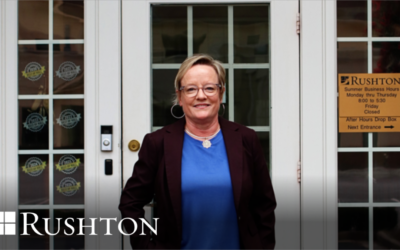
Rushton names Elisabeth Baldwin Managing Partner of Rushton Wealth Management


Throughout previous stages of life, you might have become accustomed to keeping your financial matters fairly close to the chest. Now, however, would be a good time to start involving your family as you develop and effectuate your estate plans. This article will help you think about how best to engage with your children, as you discuss your wealth and wishes. You need to take control by starting the conversation now. How? First, restate your values. Then, cover both the physical and financial sides of your estate. Also, involve any professionals that can support you with this conversation. Let’s unpack these ideas.
Sometimes retirees, particularly those in later retirement, tend to feel that discussions are had about them rather than with them. But you need to be heard. Although it may feel uncomfortable at first, you need to lead these discussions now, while you still can. It is your life, your money and your estate in question. Your wishes matter, and it is you who will be the recipient of any care you might need in your latter years. It is you who should decide what’s to be done with the fruits of your labor.
Rather than waiting for discussions to be triggered by some medical or other crisis, which is hardly the ideal time for such conversations to take place, take advantage of this time as an opportunity to express your vision and wishes. In other words, it’s time to talk to your family once again about your values—and about how you envision those values coming into play for all of you now.
The most beneficial inheritance you can leave your kids isn’t always money. Your kids could very well benefit more from the financial values and discipline you instill in them than any lump sum of cash you might leave them. These values, as much as your estate, can create a lasting legacy for your family.
Let’s look at how your financial values might come into play in your current situation.
You need to tell your kids and any other relevant parties about your wishes should you become very ill. This might seem like a sad or even a morbid topic of discussion. However, this is not only a necessary discussion from a purely practical viewpoint; it is also one that can provide the space for you to outline exactly what your wishes are for your latter years.
Here are some of the questions you might want to discuss.
Framing these issues in terms of your family’s values can help you all better navigate your way through these delicate topics with care and confidence.
At this stage in your life, perhaps the most important quality that your financial estate plans should embody is clarity. You need to clearly define all the terms of the transfer of your estate. No uncertainty should remain concerning how you want money, objects of value, savings, investments, stocks and shares or other financial resources to be bequeathed to named family members, outsiders, charities or any other party.
The best way to achieve this level of clarity is to have your financial wishes written down or communicated in a way that can be easily authenticated, witnessed and dated. You need to create a fully legalized, comprehensive will in which all of your estate and final wishes are covered. Securing the services of an estate planner and an attorney is prudent at any stage, but perhaps even more so now.
Getting professional guidance (financial and otherwise) is just as vital, if not more, in your retirement years as it has been up to this point. Financial professionals, estate planning specialists, insurance specialists, attorneys, and even medical professionals and consultants all can play vital roles in your family’s estate planning process and in its execution.
A financial professional, in particular, can serve as a trusted, central point of contact for you and your family members, and even your other ancillary advisors. Given that we should know you on a personal level, understand your goals and have an overarching view of your situation, we can be uniquely positioned to advocate for you in each of these other arenas. We can often coordinate with these other professionals to help ensure that your estate plans are properly effectuated and executed, when the time comes.
Book an appointment today to discuss your questions and how to include and engage your family in the estate planning process.
This material was developed and prepared by a third party for use by your Registered Representative. The opinions expressed and material provided are for general information and should not be considered a solicitation for the purchase or sale of any security. The content is developed from sources believed to be providing accurate information.
For a comprehensive review of your personal situation, always consult with a tax or legal advisor. Neither Cetera nor any of its representatives may give legal or tax advice.
A smooth audit starts well before the fieldwork begins. Use this checklist to get your books, records, and team ready, and to avoid last-minute scrambles.
If audit season makes you groan, you’re not alone. The word “audit” carries a lot of baggage, but a well-planned audit can be one of the most useful things that happens to your organization all year. Here is a practical guide to preparing, drawn from a GGFOA presentation on getting audit-ready.
Most growing businesses reach a point where the books can no longer be a side task. You’re up late reconciling accounts, a part-time bookkeeper is stretched thin, and nobody is sure whether the numbers are right until tax season. Client Accounting Services (CAS) exists for this moment.
Lease and subscription arrangements can be easy to overlook—but keeping an accurate, up-to-date listing of lease and subscription liabilities is an important part of maintaining reliable financial records.
Our firm offers a nonattest service designed to help governmental clients stay organized and keep pace with the requirements of GASB 87, Leases, and GASB 96, Subscription-Based Information Technology Arrangements (SBITAs).
Securing in-kind donations is vital for any non-profit or charitable organization, but just as important is accounting for them properly. In June 2020, the Financial Accounting Standards Board introduced changes to the General Accepted Accounting Principles (GAAP) for documenting and presenting the value of in-kind donations in financial statements. This article provides an overview of the changes and what you need to know.
As the 2026 calendar closes in on the October 15th deadline, many plan administrators are unsure if their employee benefit plan requires an audit. Our team can help you determine if your plan requires an audit or if your plan is approaching the audit threshold for the first time. With this knowledge, we can either act quickly and efficiently to ensure your audit is completed before the October 15th deadline or work with you to ensure you are properly prepared for your first audit in 2027.
If your organization solicits or accepts donations in Georgia, there’s a good chance you have a registration requirement you may not know about — and a reporting obligation that scales with how much your nonprofit brings in.
Here’s what Georgia nonprofits need to know.
Rushton Recognized Among the Nation’s Top Accounting Firms by Inside Public Accounting
Rushton names Elisabeth Baldwin Managing Partner of Rushton Wealth Management