A smooth audit starts well before the fieldwork begins. Use this checklist to get your books, records, and team ready, and to avoid last-minute scrambles.


A smooth audit starts well before the fieldwork begins. Use this checklist to get your books, records, and team ready, and to avoid last-minute scrambles.

If audit season makes you groan, you’re not alone. The word “audit” carries a lot of baggage, but a well-planned audit can be one of the most useful things that happens to your organization all year. Here is a practical guide to preparing, drawn from a GGFOA presentation on getting audit-ready.
Most growing businesses reach a point where the books can no longer be a side task. You’re up late reconciling accounts, a part-time bookkeeper is stretched thin, and nobody is sure whether the numbers are right until tax season. Client Accounting Services (CAS) exists for this moment.

Lease and subscription arrangements can be easy to overlook—but keeping an accurate, up-to-date listing of lease and subscription liabilities is an important part of maintaining reliable financial records.
Our firm offers a nonattest service designed to help governmental clients stay organized and keep pace with the requirements of GASB 87, Leases, and GASB 96, Subscription-Based Information Technology Arrangements (SBITAs).

Securing in-kind donations is vital for any non-profit or charitable organization, but just as important is accounting for them properly. In June 2020, the Financial Accounting Standards Board introduced changes to the General Accepted Accounting Principles (GAAP) for documenting and presenting the value of in-kind donations in financial statements. This article provides an overview of the changes and what you need to know.

As the 2026 calendar closes in on the October 15th deadline, many plan administrators are unsure if their employee benefit plan requires an audit. Our team can help you determine if your plan requires an audit or if your plan is approaching the audit threshold for the first time. With this knowledge, we can either act quickly and efficiently to ensure your audit is completed before the October 15th deadline or work with you to ensure you are properly prepared for your first audit in 2027.

If your organization solicits or accepts donations in Georgia, there’s a good chance you have a registration requirement you may not know about — and a reporting obligation that scales with how much your nonprofit brings in.
Here’s what Georgia nonprofits need to know.
Rushton Recognized Among the Nation’s Top Accounting Firms by Inside Public Accounting
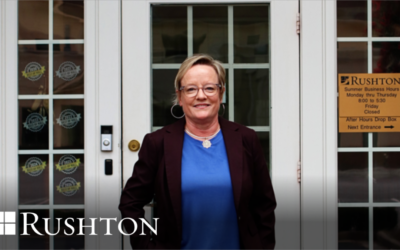
Rushton names Elisabeth Baldwin Managing Partner of Rushton Wealth Management


Today’s financial landscape offers a wealth of opportunities, but the misconception persists that wealth-building requires a rigid, one-size-fits-all approach to investing. In reality, investing should be a personalized process that reflects your personal goals, values, risk tolerance, and financial situation.
While it may be tempting to stick with one investment type or strategy, taking a thoughtful, diversified approach can help position you to pursue your financial goals with greater flexibility and confidence.
Before you can build a strong, diversified portfolio, you need to understand where you’re headed. Your financial goals provide a foundation for your investment strategy, influencing everything from your risk profile to the types of investments you choose.
Financial goals often fall into one of three key categories:
By evaluating the timeline, liquidity needs, and risk tolerance for each goal, you can build a well-balanced portfolio with a personalized mix of suitable investment vehicles.
One of the cornerstones of strategic investing is diversification, which involves spreading your investments across different asset classes to reduce risk and potentially enhance returns. Diversification positions your portfolio to better absorb fluctuations, mitigating risks linked to individual investments.
While diversification doesn’t guarantee profits or eliminate losses, it aims to improve your portfolio’s risk-adjusted returns over time.
Your investment portfolio can include a mix of asset types, each playing a distinct role in your overall strategy. Understanding these different investment options can help you identify opportunities with risk levels that align with your goals and risk tolerance.
Let’s explore some of the most common options.
Equities represent ownership stakes in businesses, typically through stocks. They are a cornerstone of many portfolios due to their potential for high returns, though they can also carry volatility. You can diversify within equities by incorporating different types of investments, including:
Note: Before investing in ETFs and mutual funds, investors should carefully consider a fund’s investment objectives, risks, charges and expenses. Fund prospectuses contain this and other information and may be obtained by asking your financial professional. Read prospectuses carefully before investing.
Tax-advantaged accounts offer opportunities to grow your investments over time while lowering tax liability. These accounts are particularly useful for retirement planning and other long-term goals. They include:
For investors seeking additional diversification, alternative investments can provide opportunities outside of traditional stock and bond markets. Some popular types of alternative investments include:
Keep in mind that while alternative investments may provide significant upside potential, they are generally considered high-risk investments.
Real estate is another popular investment that can provide both income and capital appreciation. There are multiple ways to invest in real estate, including:
In summary, real estate is a tangible asset that can provide diversification within a portfolio and may offer benefits such as inflation protection and steady cash flow, depending on market conditions.
Investing can be an effective tool for building and preserving wealth, but there is no single “right” way to invest. By defining your goals, exploring various investment types, and diversifying your portfolio, you can create a strategy that fits your needs and ambitions.
With the wide range of options available, navigating the investment landscape can feel overwhelming. Your financial professional can help you:
Contact the office to explore how these various investment approaches might complement your current strategy and help you pursue your financial objectives.
This material was developed and prepared by a third party for use by your Registered Representative. The opinions expressed and material provided are for general information and should not be considered a solicitation for the purchase or sale of any security. The content is developed from sources believed to be providing accurate information.
Cetera is not registered to offer direct investments into commodities or futures. Instead, we provide access to this asset class via mutual funds, exchange-traded funds (ETFs) and the stocks of associated companies. Investments in commodities may be affected by the overall market movements, changes in interest rates and other factors such as weather, disease, embargoes and international economic and political developments. Commodities are volatile investments and should form only a small part of a diversified portfolio. An investment in commodities may not be suitable for all investors.
REITs are subject to various risks such as illiquidity and property devaluations based on adverse economic and real estate market conditions and may not be suitable for all investors. A prospectus that discloses all risks, fees and expenses may be obtained from your representative. Read the prospectus carefully before investing. This is not a solicitation or offering which can only be made in conjunction with a copy of the prospectus. A diversified portfolio does not assure a profit or protect against loss in a declining market.
Alternative Investments often engage in leverage and other investment practices that are extremely speculative and involve a high degree of risk. Such practices may increase the volatility of performance and the risk of investment loss, including the loss of the entire amount that is invested. There may be conflicts of interest relating to the Alternative Investment and its service providers. Similarly, interests in an Alternative Investment are highly illiquid and generally are not transferable without the consent of the sponsor, and applicable securities and tax laws will limit transfers.
A smooth audit starts well before the fieldwork begins. Use this checklist to get your books, records, and team ready, and to avoid last-minute scrambles.
If audit season makes you groan, you’re not alone. The word “audit” carries a lot of baggage, but a well-planned audit can be one of the most useful things that happens to your organization all year. Here is a practical guide to preparing, drawn from a GGFOA presentation on getting audit-ready.
Most growing businesses reach a point where the books can no longer be a side task. You’re up late reconciling accounts, a part-time bookkeeper is stretched thin, and nobody is sure whether the numbers are right until tax season. Client Accounting Services (CAS) exists for this moment.
Lease and subscription arrangements can be easy to overlook—but keeping an accurate, up-to-date listing of lease and subscription liabilities is an important part of maintaining reliable financial records.
Our firm offers a nonattest service designed to help governmental clients stay organized and keep pace with the requirements of GASB 87, Leases, and GASB 96, Subscription-Based Information Technology Arrangements (SBITAs).
Securing in-kind donations is vital for any non-profit or charitable organization, but just as important is accounting for them properly. In June 2020, the Financial Accounting Standards Board introduced changes to the General Accepted Accounting Principles (GAAP) for documenting and presenting the value of in-kind donations in financial statements. This article provides an overview of the changes and what you need to know.
As the 2026 calendar closes in on the October 15th deadline, many plan administrators are unsure if their employee benefit plan requires an audit. Our team can help you determine if your plan requires an audit or if your plan is approaching the audit threshold for the first time. With this knowledge, we can either act quickly and efficiently to ensure your audit is completed before the October 15th deadline or work with you to ensure you are properly prepared for your first audit in 2027.
If your organization solicits or accepts donations in Georgia, there’s a good chance you have a registration requirement you may not know about — and a reporting obligation that scales with how much your nonprofit brings in.
Here’s what Georgia nonprofits need to know.
Rushton Recognized Among the Nation’s Top Accounting Firms by Inside Public Accounting
Rushton names Elisabeth Baldwin Managing Partner of Rushton Wealth Management