A smooth audit starts well before the fieldwork begins. Use this checklist to get your books, records, and team ready, and to avoid last-minute scrambles.

A smooth audit starts well before the fieldwork begins. Use this checklist to get your books, records, and team ready, and to avoid last-minute scrambles.

If audit season makes you groan, you’re not alone. The word “audit” carries a lot of baggage, but a well-planned audit can be one of the most useful things that happens to your organization all year. Here is a practical guide to preparing, drawn from a GGFOA presentation on getting audit-ready.
Most growing businesses reach a point where the books can no longer be a side task. You’re up late reconciling accounts, a part-time bookkeeper is stretched thin, and nobody is sure whether the numbers are right until tax season. Client Accounting Services (CAS) exists for this moment.

Lease and subscription arrangements can be easy to overlook—but keeping an accurate, up-to-date listing of lease and subscription liabilities is an important part of maintaining reliable financial records.
Our firm offers a nonattest service designed to help governmental clients stay organized and keep pace with the requirements of GASB 87, Leases, and GASB 96, Subscription-Based Information Technology Arrangements (SBITAs).

Securing in-kind donations is vital for any non-profit or charitable organization, but just as important is accounting for them properly. In June 2020, the Financial Accounting Standards Board introduced changes to the General Accepted Accounting Principles (GAAP) for documenting and presenting the value of in-kind donations in financial statements. This article provides an overview of the changes and what you need to know.

As the 2026 calendar closes in on the October 15th deadline, many plan administrators are unsure if their employee benefit plan requires an audit. Our team can help you determine if your plan requires an audit or if your plan is approaching the audit threshold for the first time. With this knowledge, we can either act quickly and efficiently to ensure your audit is completed before the October 15th deadline or work with you to ensure you are properly prepared for your first audit in 2027.

If your organization solicits or accepts donations in Georgia, there’s a good chance you have a registration requirement you may not know about — and a reporting obligation that scales with how much your nonprofit brings in.
Here’s what Georgia nonprofits need to know.

Rushton Recognized Among the Nation’s Top Accounting Firms by Inside Public Accounting
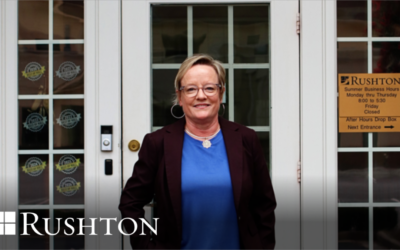
Rushton names Elisabeth Baldwin Managing Partner of Rushton Wealth Management


As a parent, you of course want to give your child the best opportunity for success, and for many, attending the “right” university or college is that opportunity. Unfortunately, being accepted to the college of one’s choice may not be as easy as it once was. Additionally, the earlier you consider how you expect to pay for college costs, the better. Today, the average college graduate owes $38,375 in debt, while the average salary for a recent graduate is $68,516.1,2
Preparing for college means setting goals, staying focused, and tackling a few key milestones along the way—starting in the first year of high school.
Before the school year begins, you and your child should have at least a handful of colleges picked out. A lot can change during high school, so remaining flexible but focused on your shared goals is crucial. It may be helpful to meet with your child’s guidance counselor or homeroom teacher for any advice they may have. You may want to encourage your child to choose challenging classes as they navigate high school. Many universities look for students who push themselves when it comes to learning. However, a balance between difficult coursework and excellent grades is important. Keeping an eye on grades should be a priority for you and your child as well.
During their sophomore year, some students may have the opportunity to take a practice SAT. Even though they won’t be required to take the actual SAT for roughly a year, a practice exam is a good way to get a feel for what the test entails.
Sophomore year is also a good time to explore extracurricular activities. Colleges are looking for the well-rounded student, so encouraging your child to explore their passions now may help their application later. Summer may also be a good time for sophomores to get a part-time job, secure an internship, or travel abroad to help bolster their experiences.
Your child’s junior year is all about standardized testing. Every October, third-year high-school students are able to take the Preliminary SAT (PSAT), also known as the National Merit Scholarship Qualifying Test (NMSQT). Even if they won’t need to take the SAT for college, taking the PSAT/NMSQT is required for many scholarships, such as the National Merit Scholarship.3
Top colleges look for applicants who are future leaders. Encourage your child to take a leadership role in an extracurricular activity. This doesn’t mean they have to be a drum major or captain of the football team. Leading may involve helping an organization with fundraising, marketing, or community outreach.
In the spring of their junior year, your child will want to take the SAT or ACT. An early test date may allow time for repeating tests during their senior year, if necessary. No matter how many times your child takes the test, most colleges will only look at the best score.
For many students, senior year is the most exciting time of high school. Seniors will finally begin to reap the benefits of their efforts during the last three years. Once you and your child have firmly decided on which schools to apply to, make sure you keep on top of deadlines. Applying early can increase your student’s chance of acceptance.
Now is also the time to apply for scholarships. Consulting your child’s guidance counselor can help you continue to identify scholarships within reach. Billions in free federal grant money go unclaimed each year, simply because students fail to fill out the free application. Make sure your child has submitted their FAFSA (Free Application for Federal Student Aid) to avoid missing out on any financial assistance available.4
Finally, talk to your child about living away from home. Help make sure they know how to manage money wisely and pay bills on time. You may also want to talk to them about the social pressures some college freshmen face for the first time when they move away from home.
For many people, college sets the stage for life. Making sure your children have options when it comes to choosing a university can help shape their future. Work with them today to make goals and develop habits that will help ensure their success.
1. EducationData.org, January 15, 2025
2. BankRate.com, May 17, 2024
3. PrincetonReview.com, 2025
4. EducationData.org, November 3, 2024
The content is developed from sources believed to be providing accurate information. The information in this material is not intended as tax or legal advice. It may not be used for the purpose of avoiding any federal tax penalties. Please consult legal or tax professionals for specific information regarding your individual situation. This material was developed and produced by FMG Suite to provide information on a topic that may be of interest. FMG Suite is not affiliated with the named broker-dealer, state- or SEC-registered investment advisory firm. The opinions expressed and material provided are for general information, and should not be considered a solicitation for the purchase or sale of any security. Copyright FMG Suite.
The strategies mentioned may not be appropriate for all investors. Please consult your financial advisors to determine a strategy that works best for you.
Investing involves risks, and investment decisions should be based on your own goals, time horizon, and tolerance for risk. The return and principal value of investments will fluctuate as market conditions change. When sold, investments may be worth more or less than their original cost. All investing involves risk, including the possible loss of principal. There is no assurance that any investment strategy will be successful. Past performance is not a guarantee of future results.
A smooth audit starts well before the fieldwork begins. Use this checklist to get your books, records, and team ready, and to avoid last-minute scrambles.
If audit season makes you groan, you’re not alone. The word “audit” carries a lot of baggage, but a well-planned audit can be one of the most useful things that happens to your organization all year. Here is a practical guide to preparing, drawn from a GGFOA presentation on getting audit-ready.
Most growing businesses reach a point where the books can no longer be a side task. You’re up late reconciling accounts, a part-time bookkeeper is stretched thin, and nobody is sure whether the numbers are right until tax season. Client Accounting Services (CAS) exists for this moment.
Lease and subscription arrangements can be easy to overlook—but keeping an accurate, up-to-date listing of lease and subscription liabilities is an important part of maintaining reliable financial records.
Our firm offers a nonattest service designed to help governmental clients stay organized and keep pace with the requirements of GASB 87, Leases, and GASB 96, Subscription-Based Information Technology Arrangements (SBITAs).
Securing in-kind donations is vital for any non-profit or charitable organization, but just as important is accounting for them properly. In June 2020, the Financial Accounting Standards Board introduced changes to the General Accepted Accounting Principles (GAAP) for documenting and presenting the value of in-kind donations in financial statements. This article provides an overview of the changes and what you need to know.
As the 2026 calendar closes in on the October 15th deadline, many plan administrators are unsure if their employee benefit plan requires an audit. Our team can help you determine if your plan requires an audit or if your plan is approaching the audit threshold for the first time. With this knowledge, we can either act quickly and efficiently to ensure your audit is completed before the October 15th deadline or work with you to ensure you are properly prepared for your first audit in 2027.
If your organization solicits or accepts donations in Georgia, there’s a good chance you have a registration requirement you may not know about — and a reporting obligation that scales with how much your nonprofit brings in.
Here’s what Georgia nonprofits need to know.
Rushton Recognized Among the Nation’s Top Accounting Firms by Inside Public Accounting
Rushton names Elisabeth Baldwin Managing Partner of Rushton Wealth Management