A smooth audit starts well before the fieldwork begins. Use this checklist to get your books, records, and team ready, and to avoid last-minute scrambles.

A smooth audit starts well before the fieldwork begins. Use this checklist to get your books, records, and team ready, and to avoid last-minute scrambles.

If audit season makes you groan, you’re not alone. The word “audit” carries a lot of baggage, but a well-planned audit can be one of the most useful things that happens to your organization all year. Here is a practical guide to preparing, drawn from a GGFOA presentation on getting audit-ready.
Most growing businesses reach a point where the books can no longer be a side task. You’re up late reconciling accounts, a part-time bookkeeper is stretched thin, and nobody is sure whether the numbers are right until tax season. Client Accounting Services (CAS) exists for this moment.

Lease and subscription arrangements can be easy to overlook—but keeping an accurate, up-to-date listing of lease and subscription liabilities is an important part of maintaining reliable financial records.
Our firm offers a nonattest service designed to help governmental clients stay organized and keep pace with the requirements of GASB 87, Leases, and GASB 96, Subscription-Based Information Technology Arrangements (SBITAs).

Securing in-kind donations is vital for any non-profit or charitable organization, but just as important is accounting for them properly. In June 2020, the Financial Accounting Standards Board introduced changes to the General Accepted Accounting Principles (GAAP) for documenting and presenting the value of in-kind donations in financial statements. This article provides an overview of the changes and what you need to know.

As the 2026 calendar closes in on the October 15th deadline, many plan administrators are unsure if their employee benefit plan requires an audit. Our team can help you determine if your plan requires an audit or if your plan is approaching the audit threshold for the first time. With this knowledge, we can either act quickly and efficiently to ensure your audit is completed before the October 15th deadline or work with you to ensure you are properly prepared for your first audit in 2027.

If your organization solicits or accepts donations in Georgia, there’s a good chance you have a registration requirement you may not know about — and a reporting obligation that scales with how much your nonprofit brings in.
Here’s what Georgia nonprofits need to know.

Rushton Recognized Among the Nation’s Top Accounting Firms by Inside Public Accounting
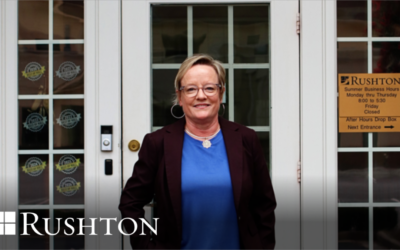
Rushton names Elisabeth Baldwin Managing Partner of Rushton Wealth Management


Medicare is a federal health insurance program for people 65 and older, as well as certain disabled individuals.
Yes. If you have not been receiving Social Security benefits for at least four months prior to turning 65, you must enroll in Medicare.
During the Initial Enrollment Period, which starts three months prior to your 65th birthday and extends three months past your 65th birthday. If your 65th birthday is January 1st, 2026, then you will be able to enroll in Medicare coverage September 1st, 2025 – March 31st, 2026.
This is the link for the website to enroll – https://www.ssa.gov/medicare/sign-up.
PLEASE NOTE: The information being provided is strictly as a courtesy. When you link to any of the websites provided here, you are leaving this website. We make no representation as to the completeness or accuracy of information provided at these websites, nor is the company liable for any direct or indirect technical or system issues or any consequences arising out of your access to or your use of third-party technologies, websites, information and programs made available through this website. When you access one of these websites, you are leaving our website and assume total responsibility and risk for your use of the websites you are linking to.
The only other reason you would not enroll at this time would be because you or your spouse are still working and you are covered by an employer’s policy. However, you can go ahead and enroll. Or, if you choose not to do so during the Initial Enrollment Period, then you must do so eight months prior to the last day of work or risk facing a life-long penalty.
If you miss the Initial Enrollment Period, you can always enroll during the General Enrollment Period annually, which is January 1st – March 31st, but you will typically face a life-long penalty for not signing up during your Initial Enrollment Period.
Part A covers inpatient hospital care, some nursing home care, post-hospital home health care, and hospice care.
Premium – There is no premium for Part A so long as you are fully vested in Social Security. If you are not fully vested, there is a premium associated.
Part B covers physicians’ services, outpatient hospital care, physical therapy, ambulance trips, medical equipment, and some preventive services.
Premium – You cannot register for Part B without Part A, and there is an income-based premium associated with Part B.
Note – You do not have to register for Part B when registering for Part A. If you are still covered under an employer’s health plan, then you would wait to register for Part B.
Part C gives you access to Part A and Part B coverage through managed care plans, such as PPOs and HMOs, with Medicare sanctioned providers. If you need more coverage for dental, vision, and prescriptions, Part C can provide that flexibility.
Premium – You will pay a premium set by the Medicare-approved provider.
Part D is prescription drug coverage. If your Medicare Advantage plan (Part C) does not cover prescription drugs, then you may want to add Part D coverage.
Premium – You will pay a premium set by the Medicare-approved provider.
You must enroll in Medicare Part A and Medicare Part Be during the Initial Enrollment Period or risk a life-long penalty (unless you are currently employed and covered under an employer’s plan). You may opt to enroll in Medicare Part C and Medicare Part D during a General Enrollment Period. Additionally, if you want to change Medicare Part C providers, you may do so during a General Enrollment Period.
A smooth audit starts well before the fieldwork begins. Use this checklist to get your books, records, and team ready, and to avoid last-minute scrambles.
If audit season makes you groan, you’re not alone. The word “audit” carries a lot of baggage, but a well-planned audit can be one of the most useful things that happens to your organization all year. Here is a practical guide to preparing, drawn from a GGFOA presentation on getting audit-ready.
Most growing businesses reach a point where the books can no longer be a side task. You’re up late reconciling accounts, a part-time bookkeeper is stretched thin, and nobody is sure whether the numbers are right until tax season. Client Accounting Services (CAS) exists for this moment.
Lease and subscription arrangements can be easy to overlook—but keeping an accurate, up-to-date listing of lease and subscription liabilities is an important part of maintaining reliable financial records.
Our firm offers a nonattest service designed to help governmental clients stay organized and keep pace with the requirements of GASB 87, Leases, and GASB 96, Subscription-Based Information Technology Arrangements (SBITAs).
Securing in-kind donations is vital for any non-profit or charitable organization, but just as important is accounting for them properly. In June 2020, the Financial Accounting Standards Board introduced changes to the General Accepted Accounting Principles (GAAP) for documenting and presenting the value of in-kind donations in financial statements. This article provides an overview of the changes and what you need to know.
As the 2026 calendar closes in on the October 15th deadline, many plan administrators are unsure if their employee benefit plan requires an audit. Our team can help you determine if your plan requires an audit or if your plan is approaching the audit threshold for the first time. With this knowledge, we can either act quickly and efficiently to ensure your audit is completed before the October 15th deadline or work with you to ensure you are properly prepared for your first audit in 2027.
If your organization solicits or accepts donations in Georgia, there’s a good chance you have a registration requirement you may not know about — and a reporting obligation that scales with how much your nonprofit brings in.
Here’s what Georgia nonprofits need to know.
Rushton Recognized Among the Nation’s Top Accounting Firms by Inside Public Accounting
Rushton names Elisabeth Baldwin Managing Partner of Rushton Wealth Management