A smooth audit starts well before the fieldwork begins. Use this checklist to get your books, records, and team ready, and to avoid last-minute scrambles.


A smooth audit starts well before the fieldwork begins. Use this checklist to get your books, records, and team ready, and to avoid last-minute scrambles.

If audit season makes you groan, you’re not alone. The word “audit” carries a lot of baggage, but a well-planned audit can be one of the most useful things that happens to your organization all year. Here is a practical guide to preparing, drawn from a GGFOA presentation on getting audit-ready.
Most growing businesses reach a point where the books can no longer be a side task. You’re up late reconciling accounts, a part-time bookkeeper is stretched thin, and nobody is sure whether the numbers are right until tax season. Client Accounting Services (CAS) exists for this moment.

Lease and subscription arrangements can be easy to overlook—but keeping an accurate, up-to-date listing of lease and subscription liabilities is an important part of maintaining reliable financial records.
Our firm offers a nonattest service designed to help governmental clients stay organized and keep pace with the requirements of GASB 87, Leases, and GASB 96, Subscription-Based Information Technology Arrangements (SBITAs).

Securing in-kind donations is vital for any non-profit or charitable organization, but just as important is accounting for them properly. In June 2020, the Financial Accounting Standards Board introduced changes to the General Accepted Accounting Principles (GAAP) for documenting and presenting the value of in-kind donations in financial statements. This article provides an overview of the changes and what you need to know.

As the 2026 calendar closes in on the October 15th deadline, many plan administrators are unsure if their employee benefit plan requires an audit. Our team can help you determine if your plan requires an audit or if your plan is approaching the audit threshold for the first time. With this knowledge, we can either act quickly and efficiently to ensure your audit is completed before the October 15th deadline or work with you to ensure you are properly prepared for your first audit in 2027.

If your organization solicits or accepts donations in Georgia, there’s a good chance you have a registration requirement you may not know about — and a reporting obligation that scales with how much your nonprofit brings in.
Here’s what Georgia nonprofits need to know.

Rushton Recognized Among the Nation’s Top Accounting Firms by Inside Public Accounting
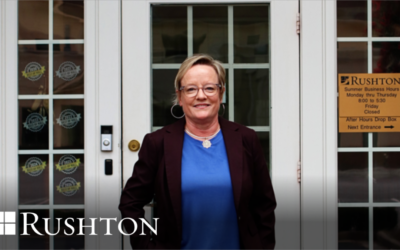
Rushton names Elisabeth Baldwin Managing Partner of Rushton Wealth Management


With tax season here, it’s important to consider how tax-intelligent financial planning can lead to potential tax saving opportunities. By taking advantage of various strategies, such as IRA distributions and conversions, capital gains and capital loss carry over and charitable giving, you can potentially lower your tax bill and keep more of your hard-earned money.
One strategy to consider is IRA distributions and conversions. If you have a traditional IRA, you may be able to convert it to a Roth IRA, which can provide tax-free income in retirement. Additionally, taking advantage of qualified charitable distributions from your IRA can satisfy your required minimum distributions and lower your taxable income. Let’s take a deeper look into this strategy:
IRA Conversions
In certain situations, it may be advantageous to move some or all your funds from one retirement account type to another. A Roth IRA conversion can be beneficial, especially if you anticipate a high income in retirement. However, before converting, you should consider the potential increase in taxable income, the five-year holding rule and the tax implications of converting if your original retirement account contains pre-tax contributions. Withdrawing money from your account early to pay conversion taxes could also result in penalties. It’s crucial to weigh the pros and cons before proceeding with a conversion.
IRA Distributions
There are various strategies to consider when it comes to withdrawing funds from your retirement accounts. Two approaches worth considering:
The traditional approach aims to allow tax-deferred assets more time to grow. Proportional withdrawals can lead to a more stable tax bill, potentially lower lifetime taxes and higher after-tax income. Depending on your unique situation, one method may prove to be more beneficial than the other.
Another strategy is to consider your capital gains and capital loss carry over. By selling investments with losses, you can offset gains and potentially reduce your tax bill. Any remaining capital losses can be carried over to future tax years. Here are some ways this strategy could save you on your tax bill:
Capital Loss Carryover
If you sell stock or mutual funds at a loss, you can use the loss to offset capital gains from similar sales. Current year net losses up to $3,000 can be reported, or $1,500 if married and filing separately. Net losses over $3,000 can be carried over to next year’s return indefinitely. Unused prior-year losses can be subtracted from the current year’s net capital gains and a loss up to $3,000 can be reported and deducted from income.
Capital Gains
Capital gains taxes are owed when an asset, such as investment securities, real estate or an investment property, is sold for more money than was paid for the asset. The tax rate depends on the length of time the asset is held, with long-term holdings taxed at a lower rate than short-term holdings.
There are several strategies you can implement that can help you to minimize capital gains taxes. Here are four key strategies to consider:
Finally, charitable giving can be an effective way to reduce your tax bill while supporting causes you care about. By using the proper tax planning strategies, charitable contributions can reduce three kinds of federal taxes: capital gains (as was just explored), income and estate taxes.
When donating appreciated assets, such as stocks or mutual funds, you can reduce or eliminate capital gains tax and receive a tax deduction for the full value of the asset.
Charitable Giving
Knowing which tax strategies to utilize when making charitable donations can help you determine the amount, asset and timing of your gift to ensure that you are providing the maximum benefit to charity while also receiving the maximum tax advantages for yourself. Here are a few ways you may be able to save:
Tax-intelligent financial planning can provide numerous potential tax saving opportunities. Whether building your family and career, preparing for retirement or passing on wealth to future generations, working with a tax-intelligent Financial Professional can be one of your greatest assets and potentially lower your tax bill so you can keep more of your hard-earned money. To determine the best strategies for your unique situation, contact your tax-intelligent Financial Professional today.
The strategies mentioned may not be appropriate for all investors. Please consult your financial or tax advisor to determine a strategy that works best for you. Retirement plan withdrawals may be subject to taxation and penalties when withdrawn early.
A smooth audit starts well before the fieldwork begins. Use this checklist to get your books, records, and team ready, and to avoid last-minute scrambles.
If audit season makes you groan, you’re not alone. The word “audit” carries a lot of baggage, but a well-planned audit can be one of the most useful things that happens to your organization all year. Here is a practical guide to preparing, drawn from a GGFOA presentation on getting audit-ready.
Most growing businesses reach a point where the books can no longer be a side task. You’re up late reconciling accounts, a part-time bookkeeper is stretched thin, and nobody is sure whether the numbers are right until tax season. Client Accounting Services (CAS) exists for this moment.
Lease and subscription arrangements can be easy to overlook—but keeping an accurate, up-to-date listing of lease and subscription liabilities is an important part of maintaining reliable financial records.
Our firm offers a nonattest service designed to help governmental clients stay organized and keep pace with the requirements of GASB 87, Leases, and GASB 96, Subscription-Based Information Technology Arrangements (SBITAs).
Securing in-kind donations is vital for any non-profit or charitable organization, but just as important is accounting for them properly. In June 2020, the Financial Accounting Standards Board introduced changes to the General Accepted Accounting Principles (GAAP) for documenting and presenting the value of in-kind donations in financial statements. This article provides an overview of the changes and what you need to know.
As the 2026 calendar closes in on the October 15th deadline, many plan administrators are unsure if their employee benefit plan requires an audit. Our team can help you determine if your plan requires an audit or if your plan is approaching the audit threshold for the first time. With this knowledge, we can either act quickly and efficiently to ensure your audit is completed before the October 15th deadline or work with you to ensure you are properly prepared for your first audit in 2027.
If your organization solicits or accepts donations in Georgia, there’s a good chance you have a registration requirement you may not know about — and a reporting obligation that scales with how much your nonprofit brings in.
Here’s what Georgia nonprofits need to know.
Rushton Recognized Among the Nation’s Top Accounting Firms by Inside Public Accounting
Rushton names Elisabeth Baldwin Managing Partner of Rushton Wealth Management